Budget Breakdown: How Both Chambers Propose Using CCA Funds
This week, the House and Senate released its proposals for the state’s operating, transportation, and capital budgets. Each budget contains Climate Commitment Act (CCA) revenue. Below you’ll find some context, a breakdown of the numbers, and what we think should come next.
As a reminder: Last year, the Legislature adopted a biennial budget for 2025-2027 and appropriated approximately $3 billion in CCA dollars. This year, the Legislature is preparing a supplemental budget, meaning they are making changes to the baseline biennial budget, and deciding how to allocate revenue that exceeded an earlier CCA fiscal forecast.
The Governor proposed, and the Legislature so far has indicated its intent, to direct a significant portion of CCA revenue to help close the state’s operating budget gap. Clean & Prosperous is opposed to this tactic; you can read last week’s newsletter for more on that.
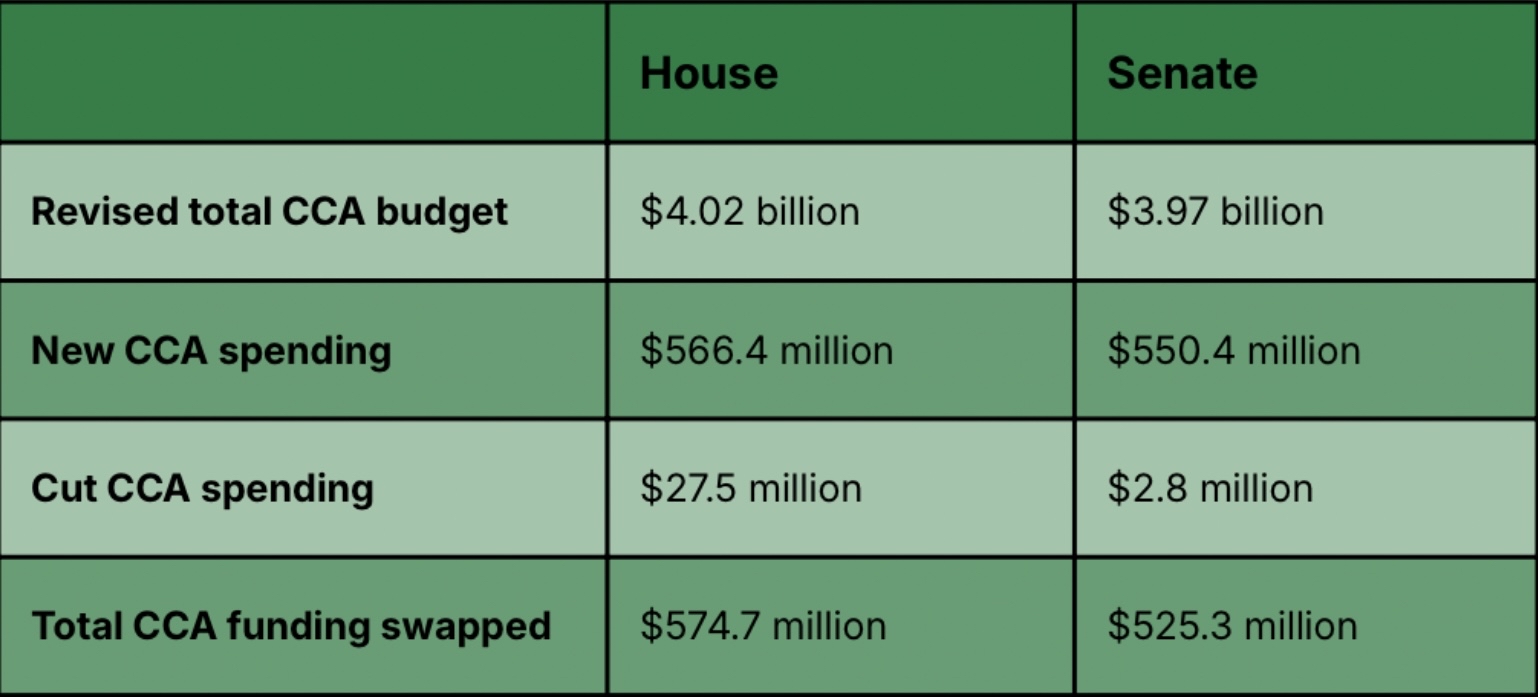
Here is a breakdown of the revised total CCA budget (pre-existing biennium plus the new supplemental), including what’s new, what’s been cut, and what each chamber swapped to fill its general budget gap.
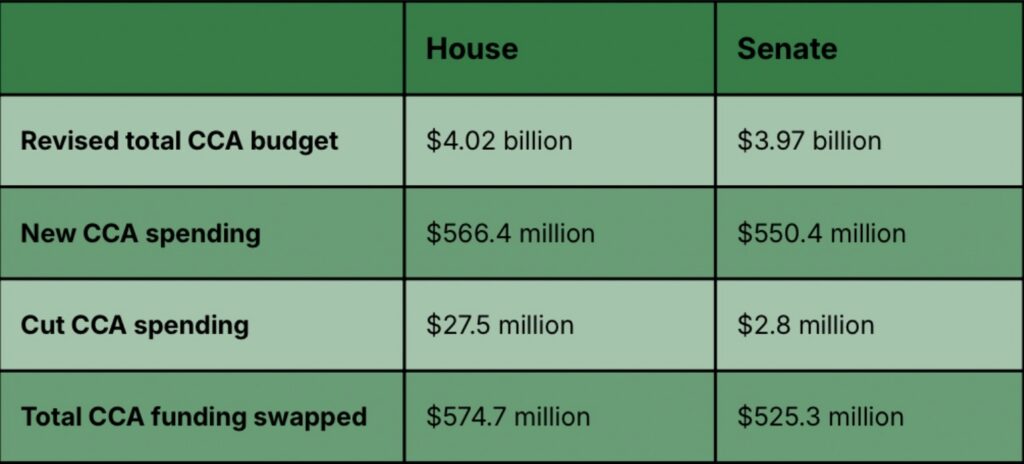
The House swap splits funding for the Working Families Tax Credit and some natural resources projects, while the Senate swap focuses on clean energy-related projects and natural resources programs.
Clean & Prosperous appreciates that the Senate budget maintains a clearer nexus to the intent of the CCA by concentrating resources on broadly shared environmental priorities, potentially mitigating future pressure on the capital budget. But, both approaches rely on funding items that previously were supported by a different funding source. Importantly, one proposal making its way through the Legislature would make the CCA whole by paying the swap back in the future.
As detailed in our previous newsletter, there are several CCA-funded programs that are oversubscribed; allocating additional funding toward these programs allows the state to meet an existing need and support climate and clean energy efforts that are ready to come online now.
Last Call to Sign Up for an Early Notification for Study Mission 6.0
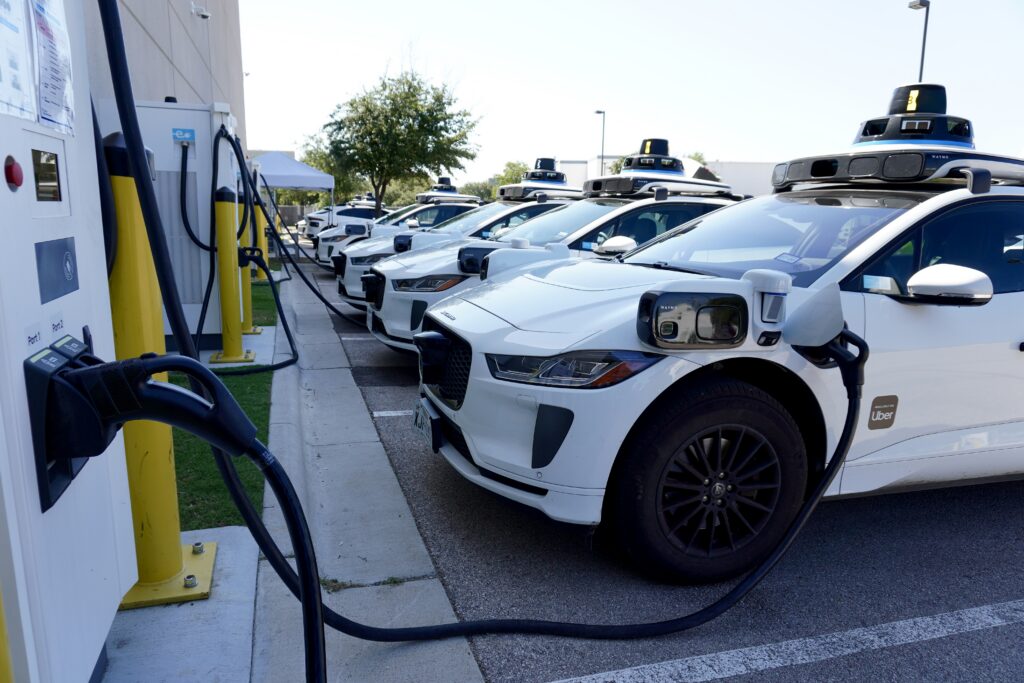
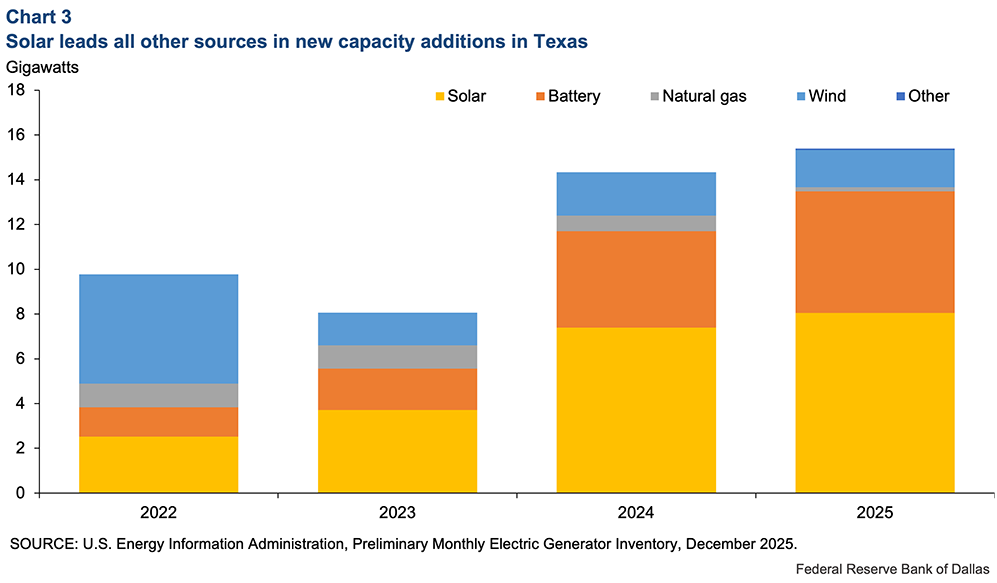
In case you missed it: At our Future of Carbon Policy Forum we announced our Study Mission 6.0: Building Bigger & Faster in Texas! We’ll be heading down south May 11-15, 2026 to engage directly with clean energy advocates, regulators, project developers, and policymakers to learn how Texas is building clean energy faster and at scale – and what Washington can apply at home.

Some breaking news out of the Energy Information Administration: The United States will add a record amount – 86 gigawatts (GW) – of utility-scale electricity generating capacity in 2026. The vast majority (93 percent) of that comes from solar, battery storage, and wind.
Of that, Texas will account for 40 percent of new solar additions across the U.S., and 53 percent of battery storage capacity.
If you’re interested in joining our Study Mission 6.0, this week is your last opportunity to sign up to receive an early notification when registration opens. This ensures you can secure a spot on the trip and access tickets at a lower price point!
If your organization is interested in partnering with Clean & Prosperous on our Study Mission 6.0: Building Bigger & Faster in Texas, you can explore this packet and reach out to us directly.
Clean Energy Investments Are Down, But Not Out
Newly published data shows good news and bad news for the clean energy transition in the United States.
Unsurprisingly, it’s clear that the federal government’s full-scale retrenchment on clean energy is having an impact.
According to a new analysis from Clean Energy Works and E2, companies walked away from $34.8 billion in projects last year. Project reversals in 2025 eliminated more than 38,000 jobs, outweighing the almost 23,000 jobs announced during the year and resulting in a net loss of more than 15,000 expected clean energy jobs.
Nearly all of those losses came from manufacturing – the factories meant to anchor domestic electric vehicle (EV), battery, and grid supply chains. EV and battery projects alone accounted for more than $21 billion each in pulled investment, with ripple effects across supplier and local economies.
The good news: Growth isn’t slowing completely, and we continue to set records for clean energy capacity. Like we mentioned above, the EIA anticipates that 2026 will see the highest utility-scale electricity generation capacity ever, and renewables are absolutely dominating that energy mix.
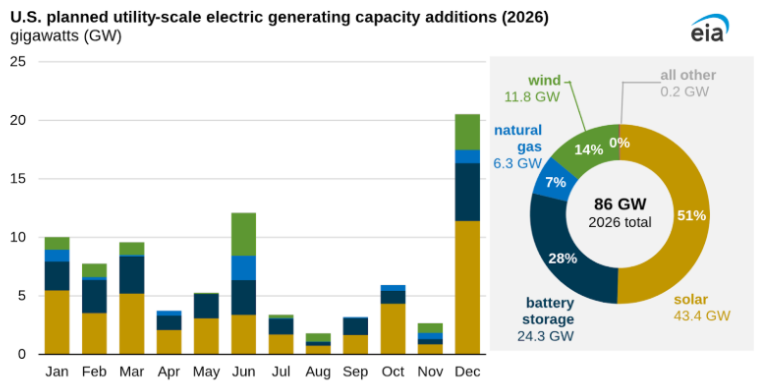
Read the full 2026 outlook from EIA here.
Follow Clean & Prosperous
Follow Clean & Prosperous on social media to learn about our work to accelerate clean energy and power prosperity for communities across Washington. You can find us on these channels:
- LinkedIn: @clean-and-prosperous
- Instagram: @cleanandprosperous
- Bluesky: @cleanandprosperous.bsky.social