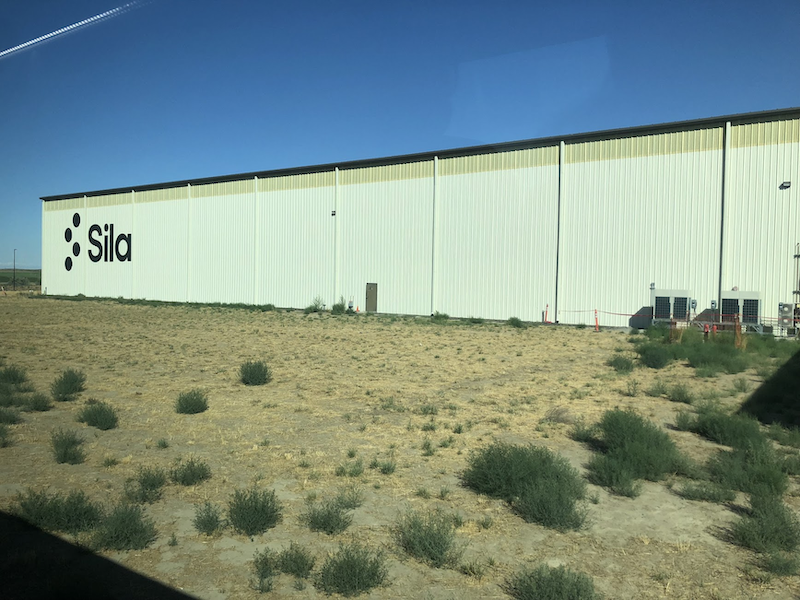
This week, we had the pleasure of attending the grand opening and start of operations of Sila Moses Lake. This new manufacturing plant will produce 50 percent more efficient batteries, which will help build climate and economic resiliency, make electric vehicles and sources of clean power more viable, and ultimately reduce pollution and improve air quality.
This is a full circle moment for the team at Clean & Prosperous Institute (CPI)! We’ve been following Sila’s first-of-its-kind battery manufacturing effort for a while now.
Hop in our (electric) DeLorean and head back to 2022, when Sila CEO Gene Berdichevsky peered through lab goggles and told our Study Mission 2.0 delegation about how they had invented a way to increase battery efficiency by 50 percent, and had plans to build a new, much larger plant in Washington state.
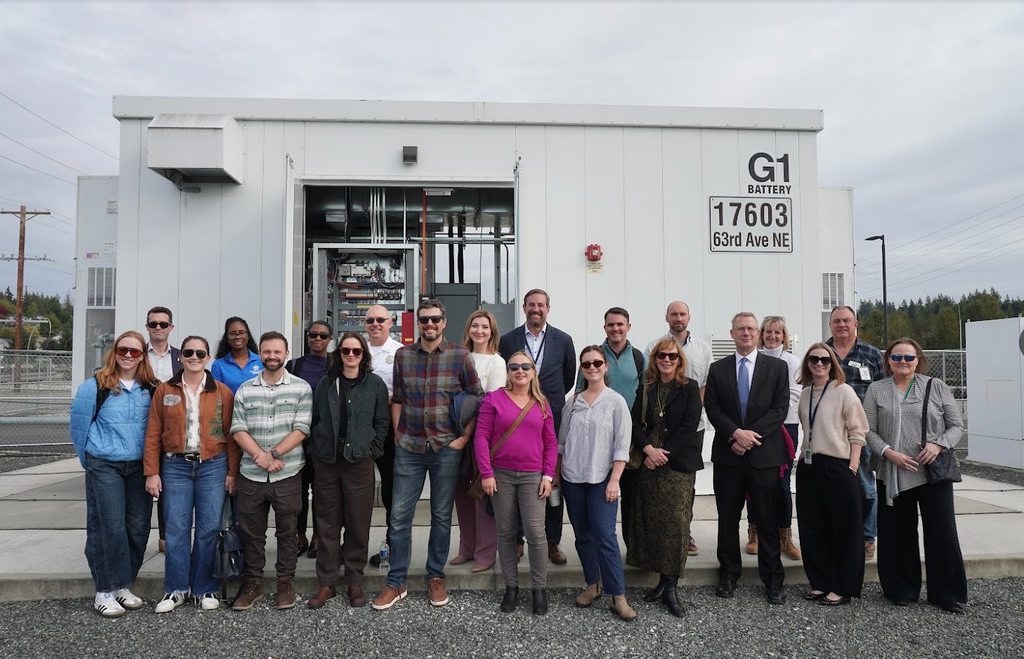
Two years later, we brought our Study Mission 4.0 delegation to their construction site in Moses Lake to see their progress in Washington state.
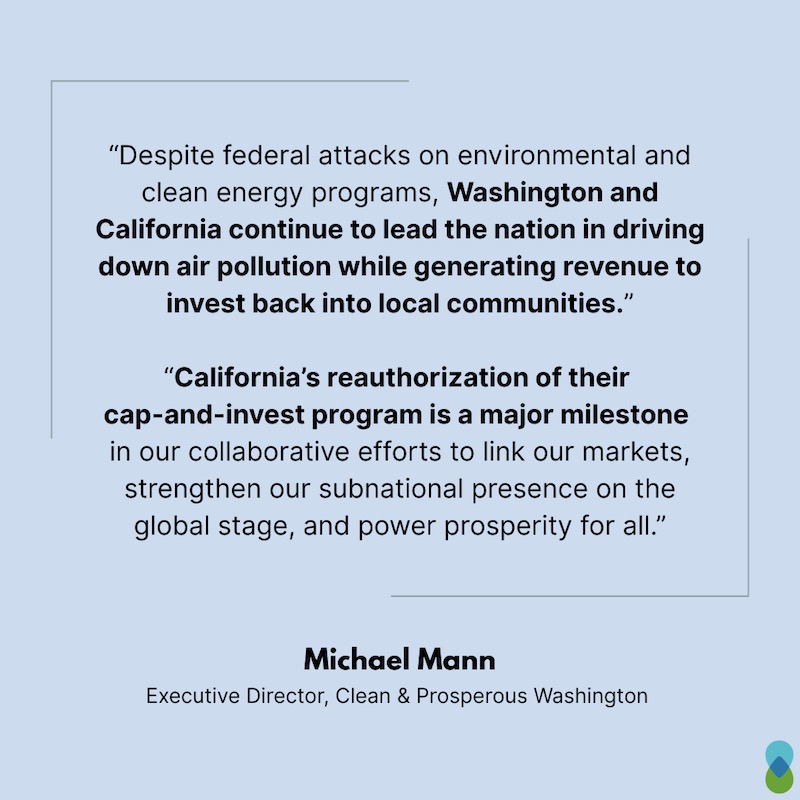
“The opening of Sila’s Moses Lake facility is a big step forward for Washington’s clean energy future. Making advanced battery materials right here at home means good jobs for our communities, faster progress toward clean energy, and keeping America at the forefront when it comes to innovation,” said Washington State Department of Commerce Director Joe Nguyen, who was a Study Mission 4.0 delegation member.
It is amazing to see the progress Sila has made in just one year. Their Moses Lake plant is one million times larger than their existing facility in Alameda, California, and at peak capacity, it will create approximately 500 new jobs in the region. At our Study Mission 4.0, we learned this plant will be large enough to produce highly efficient battery material for over one million electric vehicles.
Congratulations to our partners at Sila on this exciting milestone! This is a great achievement for the economy, for workers, for Eastern Washington, and for the clean energy transition.
Spotlight on Batteries: EVs Save Everyone Money & Stabilize the Grid
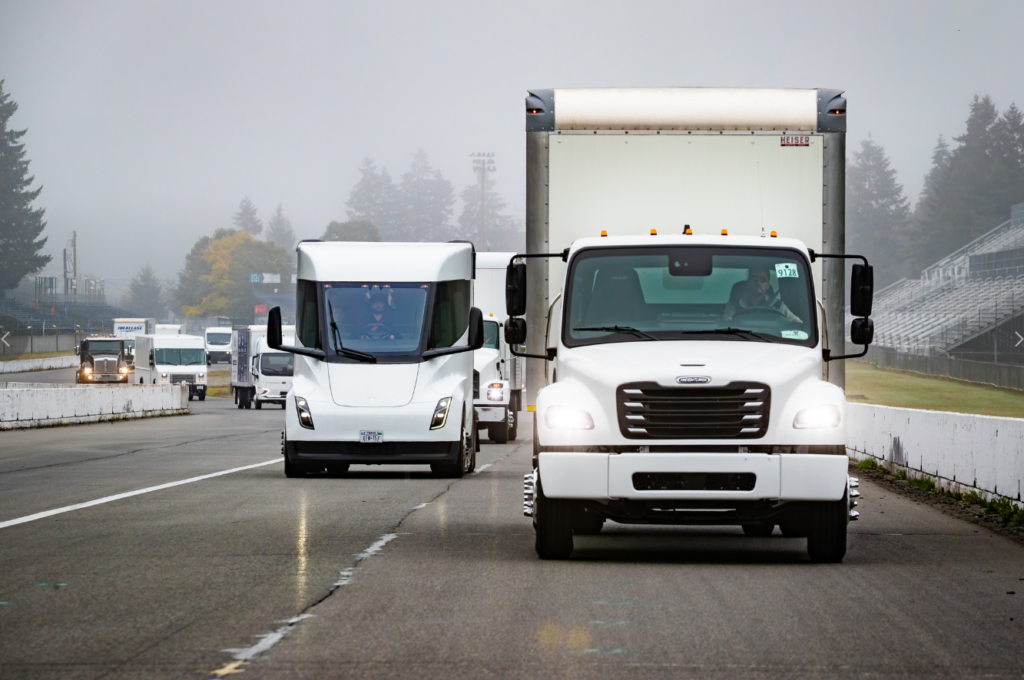
Batteries are a central element to an effective, efficient transition to a clean energy economy. One crucial way they do that? By powering electric vehicles! New research from EV.energy shows that electric vehicles save everyone money – and not just on fuel prices. With managed charging, EVs could cut costs for the average American by 10 percent.
Here’s how it works: When EVs are charged outside of peak hours – when it’s cheaper for utilities to provide electricity due to lower demand – they increase revenue for utilities more than they increase costs by more fully utilizing existing power generation. Data show that over-performance of EVs puts downward pressure on pricing, and has resulted in lower rates for customers.
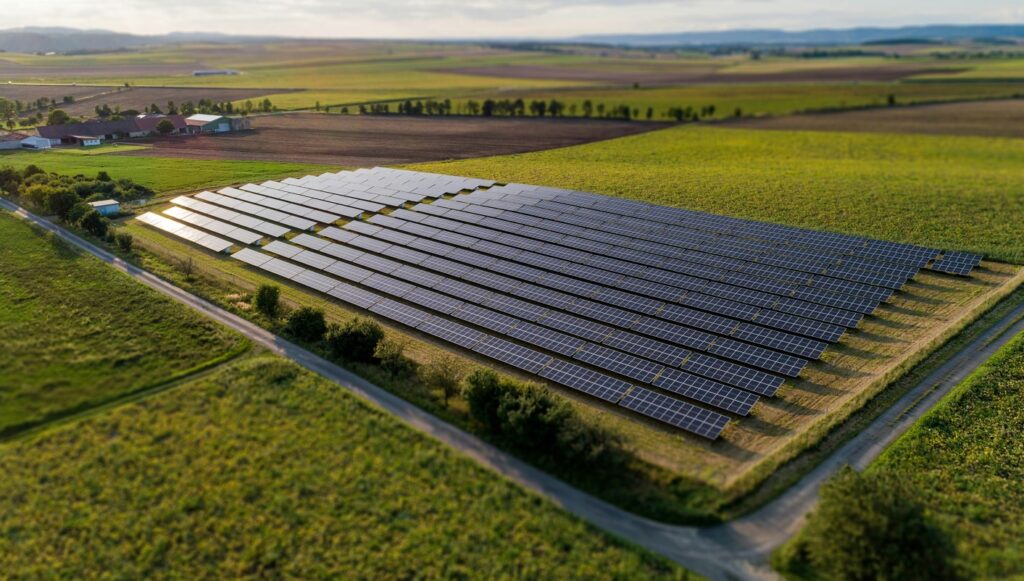
EVs have another benefit beyond cost savings for everyone: They have a big, flexible power load that can store many kilowatt-hours at once. This means they can act as ideal virtual power plants and feed energy back to the grid during peak hours.
Spotlight on Batteries: Batteries Get a Second Life as Energy Storage
Once a battery has reached the end of its EV service, new research underscores the benefits of prioritizing a second-life for the battery in energy storage!
Using California as a case study, the researchers found that recycling EV batteries for energy storage – rather than simply recycling them without a second-life use – saved 8 million metric tons of CO2 emissions.

These projects are not just theory – they’re coming online as we speak! B2U Storage Solutions announced recently that 500 second-life EV batteries will serve as energy storage in Texas, prolonging the batteries’ lifespan by eight years with a total capacity of 24 megawatt hours of renewable power.
That’s alongside a Redwood Materials plant in Nevada, which houses 792 second-life EV batteries, resulting in 63 megawatt hours of second-life grid storage.
This is a great example of the clean energy economy at work. Batteries are produced for and used in zero-emission vehicles, then recycled for energy storage which integrates renewables into the power grid, while also extending the life of the batteries themselves. At every turn, greenhouse gas emissions are reduced!
Follow CPI on Social Media
Follow Clean & Prosperous Institute on social media to learn more about our work to transition to a clean energy economy. You can find us on these channels:
- LinkedIn: @clean-prosperous-institute
- Instagram: @cleanprosperousinstitute
Bluesky: @cleanandprosperous.bsky.social