GeekWire recently published an article featuring a quote that caught our attention from Washington State Department of Commerce Director Joe Nguyen:
“We build shit.”
Director Nguyen was speaking in the context of how Washington state can remain resilient against climate and clean energy rollbacks pursued by the federal government. Why? Because we have the capital, workforce, institutional know-how, and a history of leading cutting-edge innovation.
Today’s newsletter embraces the “build shit” mentality! We have to build more clean energy facilities faster to meet our current and expected energy needs, grow the economy and create jobs, and accelerate the transition away from polluting, unhealthy, and expensive fossil fuels that impact extreme weather and threaten our natural resources.
Read the full article in GeekWire.
And We Are! Two New Decarbonization Projects Move Forward
And we are building! Two new decarbonization projects recently reached significant milestones.
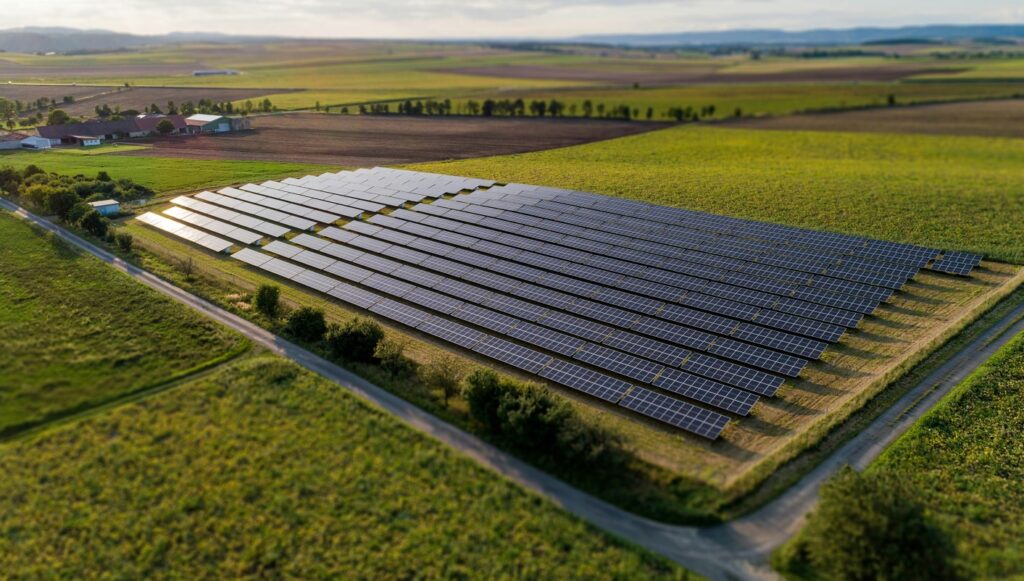
Puget Sound Energy (PSE) recently began construction on a new, utility-scale solar farm in Southeast Washington! The project is creating 300 new construction jobs, and when it goes live in 2026, it will produce enough energy to power 30,000 homes.

In Eastern Washington, SkyNRG is one step closer to realizing their first-of-its-kind sustainable aviation fuel (SAF) production facility. Once online in 2029, the facility could produce 50 million gallons of SAF and renewable diesel each year. It will also create 600 construction jobs to build the facility – and approximately 100 jobs for ongoing operations.
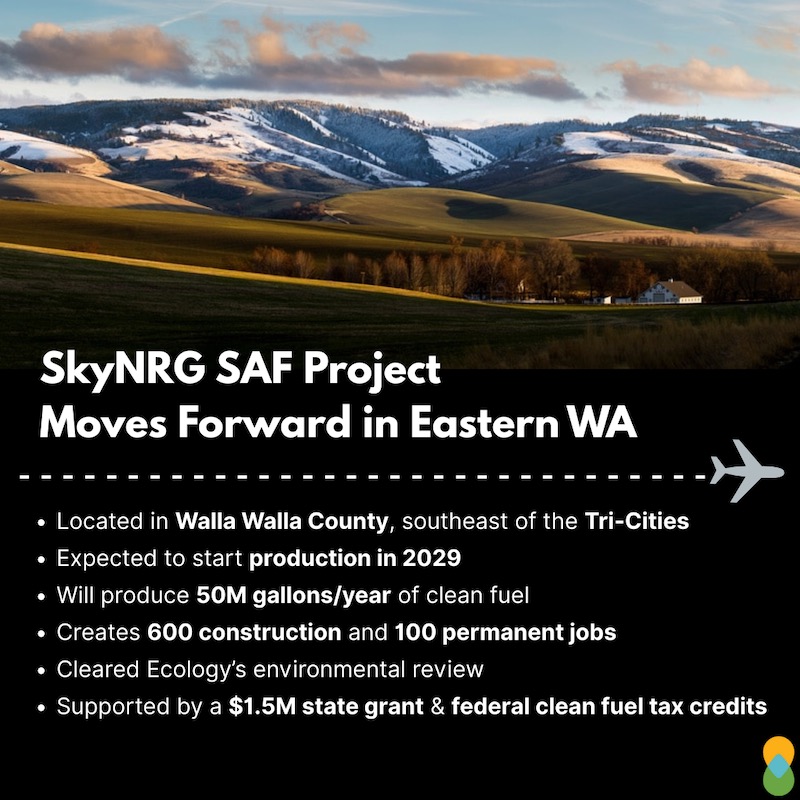
Developing SAF capacity is crucial for meeting our emissions reduction goals. Aviation – when combined with marine and rail operations – makes up 16 percent of our greenhouse gas emissions in Washington.
Why This Matters
New reporting in The Seattle Times makes clear why building more clean energy facilities faster matters: “The report found the power-reliability gap to be around 1,300 megawatts in 2026, eventually growing to around 8,600 megawatts in 2030…There are around 3,000 megawatts worth of energy projects that will likely come online by 2030.”
However, it’s highly unlikely that the full 3,000 megawatts of capacity will be built by 2030, given federal clean energy rollbacks. That comes as forecasters are predicting continued (but, likely measured) growth in energy demand, currently projected at 3.2 percent growth per year.

What are the potential implications of this energy gap? In the not-too-distant future, rolling blackouts. From the article: “Starting next year, the Northwest could face a power shortage that would challenge the reliability of the grid during extreme conditions, according to the report.”
What can we do about it? One key piece is ensuring the Bonneville Power Administration (BPA) must continue and accelerate its efforts already underway to improve their processes for connecting renewable energy projects to the grid and expanding transmission. Since 2015, BPA has had the lowest large renewable energy project approval rate of any region at 0.2 percent. For a point of comparison, the Electric Reliability Council of Texas (ERCOT) has an approval rate of 28 percent.
Follow CPI on Social Media
Follow Clean & Prosperous Institute on social media to learn more about our work to transition to a clean energy economy. You can find us on these channels:
- LinkedIn: @clean-prosperous-institute
- Instagram: @cleanprosperousinstitute
- Bluesky: @cleanandprosperous.bsky.social