Celebrating WA’s First Standalone Utility-Scale BESS Project
Clean & Prosperous loves batteries. We wax poetic about them. We travel to Texas to see them in-person. We make memes about them. And last week, we celebrated them coming to Washington state!
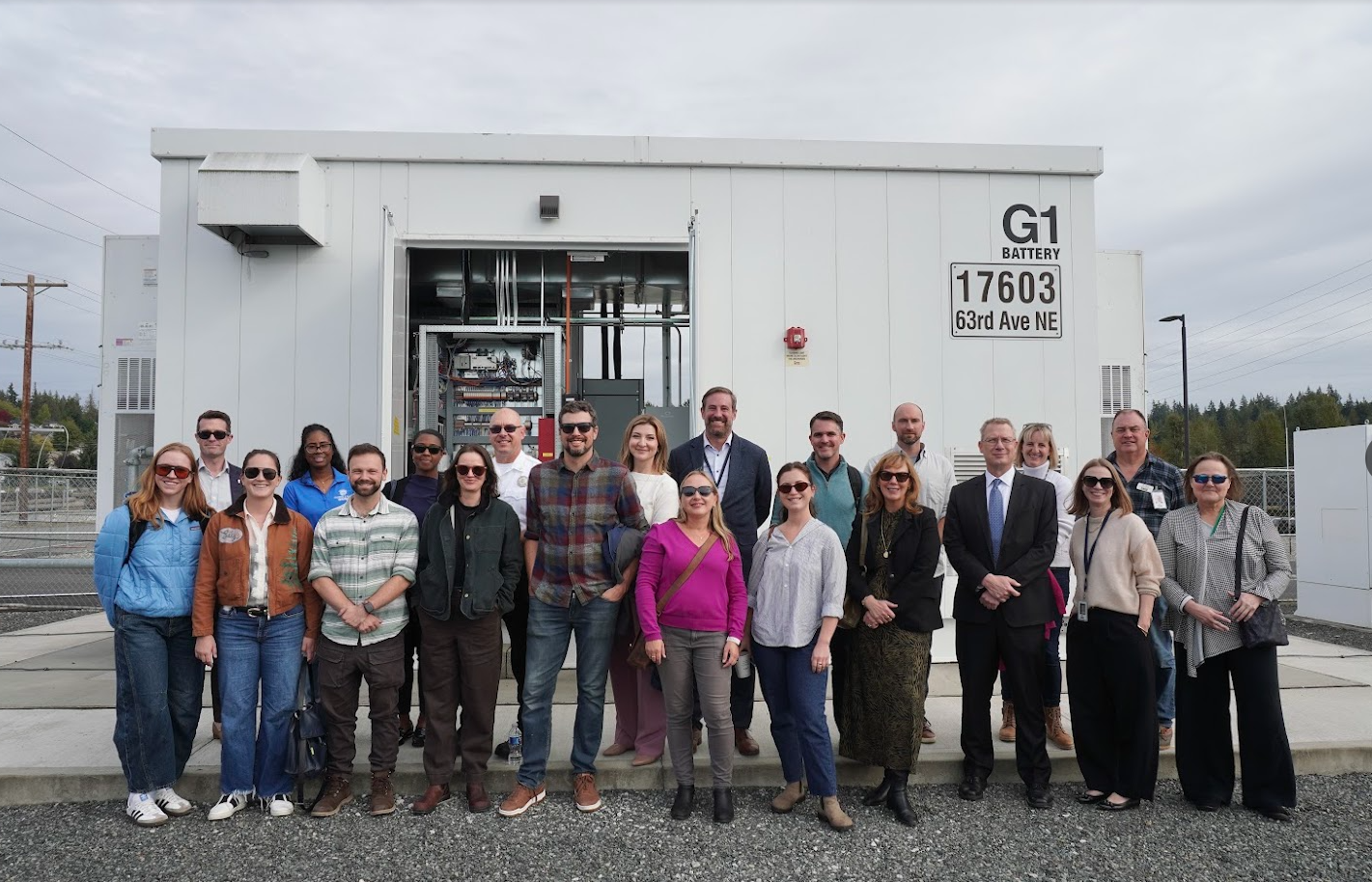
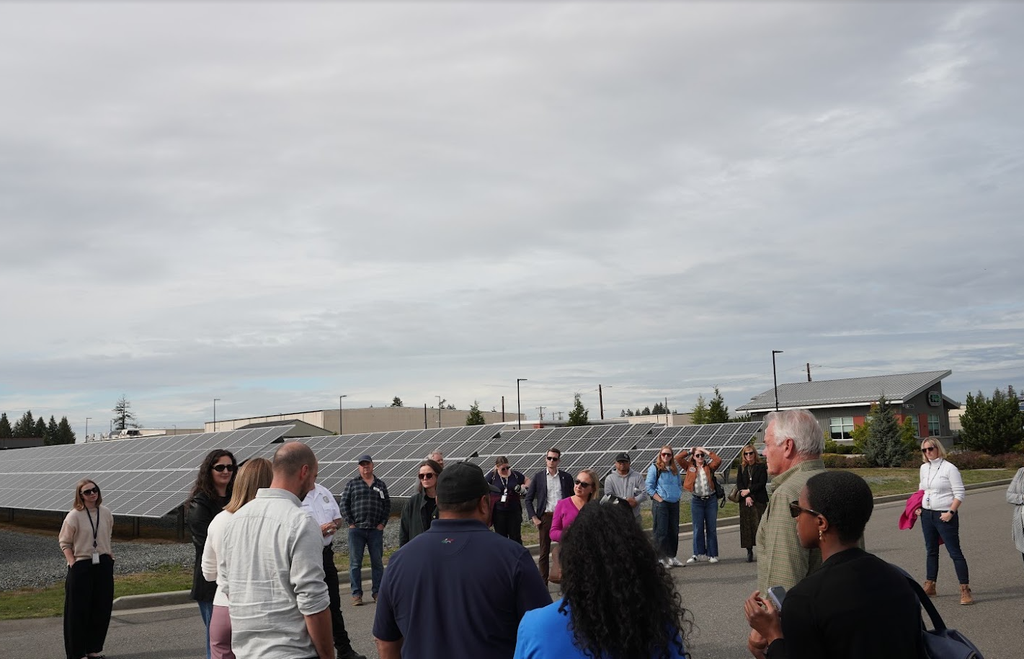
We were thrilled to bring a delegation of regulators, businesses, utilities, and nonprofits to Snohomish County PUD’s (SnoPUD) new 25 megawatt (MW) battery energy storage system in Arlington, which is currently the largest standalone battery storage facility of its kind in Washington state.
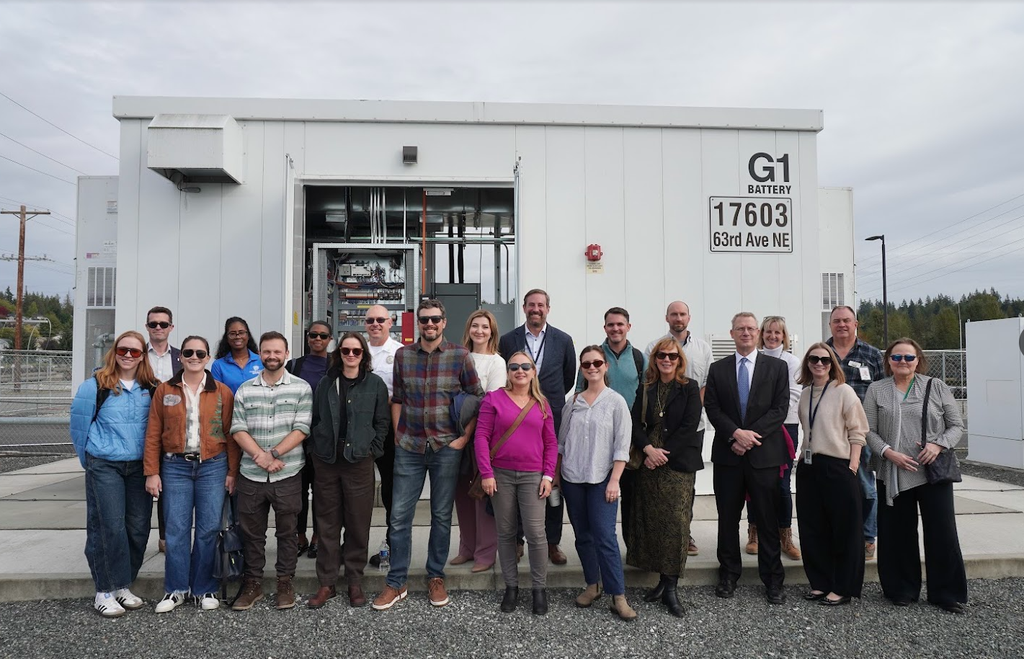
The SnoPUD team briefed our delegation on how large-scale batteries can store energy and deploy it when needed, helping meet growing electricity demand and support grid resilience. They walked us step-by-step through the planning, siting, and permitting process, which included working in close coordination with the City of Arlington to develop a Battery Energy Storage System (BESS) code update at the city.
From the initial idea to energization, this 25 MW BESS project took about four years to come to fruition, and this was under essentially a best case scenario for Washington state. SnoPUD already owned the land, which was an industrial park, meaning limited residential contact. They had an extremely willing and collaborative partner in the City of Arlington, which occasionally turned permit approvals around as quickly as one week.
As a point of comparison, the Callisto I Energy Center, a 200 MW BESS facility we visited in Houston, took 18 months to come online, from planning to energization. That facility was also subject to environmental, civil, building, and waterline permits, as well as fire department review.
We believe that battery storage can supercharge Washington’s clean energy transition. But Washington needs to significantly increase its pace of development of similar projects, particularly in the Puget Sound region where generation capacity is more stretched, but load is greater.
If our best-case planning, siting, and permitting scenario is four years, the reality is Washington state is going to dramatically miss its clean electricity targets under the Clean Energy Transformation Act (CETA) in 2030.
What does that mean in practice? It means a prolonged reliance on fossil fuels, including highly polluting natural gas peaker plants. Overburdened communities in proximity to diesel exhaust from heavy-duty trucking, industrial pollution, and wildfire smoke will continue to bear a disproportionate impact of the health and climate consequences. And communities across Washington will continue to pay for our reliance on volatile, expensive fossil fuels, both on their utility bills, and in the broader costs to health insurance, home insurance, and at the pump.
The entire team at SnoPUD deserves a massive kudos for bringing the first BESS facility of its kind online in Washington state. As a utility, they’re doing incredible work across the clean technology portfolio – we also saw a solar microgrid and vehicle-to-grid infrastructure on-site! We’re grateful to them for hosting us and providing a benchmark for how Washington can build much more clean energy infrastructure, much faster.
A Build SHIIT Win in Pierce County
In case you missed it: On September 15, the Pierce County Council voted to adopt a new solar and BESS ordinance, which creates a clearer path for well-sited clean energy and storage projects to move forward.
Effective city- and county-level ordinances help keep local control and preserve local community voices. Removing siting and permitting siting barriers helps move projects from the pipeline to construction, bringing more clean energy, reliable, affordable power, and family-sustaining jobs to Washington as more communities embrace solutions like this.
Congratulations to Pierce County on their thoughtful development of this ordinance, which will help the county tap into the existing economic and workforce potential in its clean energy pipeline!
FedEx Orders 2,000 All-Electric Trucks from Harbinger
In our last newsletter, we dove into why there has never been a better time to switch to an electric vehicle, particularly for the medium- and heavy-duty segment. We’re now seeing exciting announcements showing that major fleets are starting to make the transition at scale!
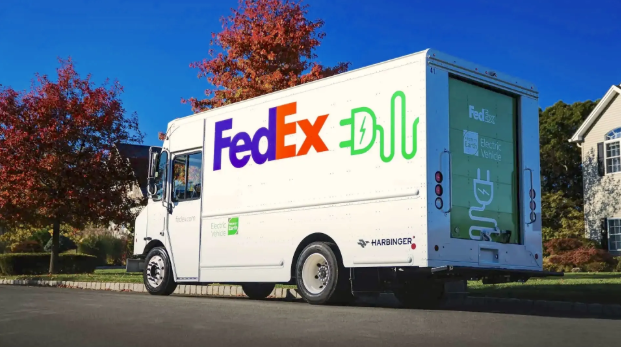
FedEx recently announced that they ordered 2,000 all-electric trucks from Harbinger, at a cost of approximately $300 million. Harbinger estimates that their electric truck will save FedEx $20,000 per vehicle per year on fuel alone. When you multiply that by the number of trucks purchased and their expected functional service timeline (20 years), that amounts to about $800 million in total savings for FedEx by switching to electric.
Beyond FedEx, we also saw Microsoft and PepsiCo lead a coalition of major fleets in the purchase of 2,500 battery-electric Class 8 trucks. Coordinated demand for electric trucks can help accelerate adoption at scale. It’s exciting to see these record orders bring more zero-emission vehicles to the road and show how corporate climate commitments can translate into commercially scalable freight deployment.
Here in Washington, initiatives like the Washington Zero Emission Incentive Program (WAZIP) and the diesel reduction grants from the Washington State Department of Ecology dramatically reduce the upfront cost of a zero-emission vehicle, while utilities including Puget Sound Energy and Seattle City Light provide significant discounts for associated charging infrastructure.
Follow Clean & Prosperous
Follow Clean & Prosperous on social media to learn about our work to accelerate clean energy and power prosperity for communities across Washington. You can find us on these channels:
- LinkedIn: @clean-and-prosperous
- Instagram: @cleanandprosperous
- Bluesky: @cleanandprosperous.bsky.social