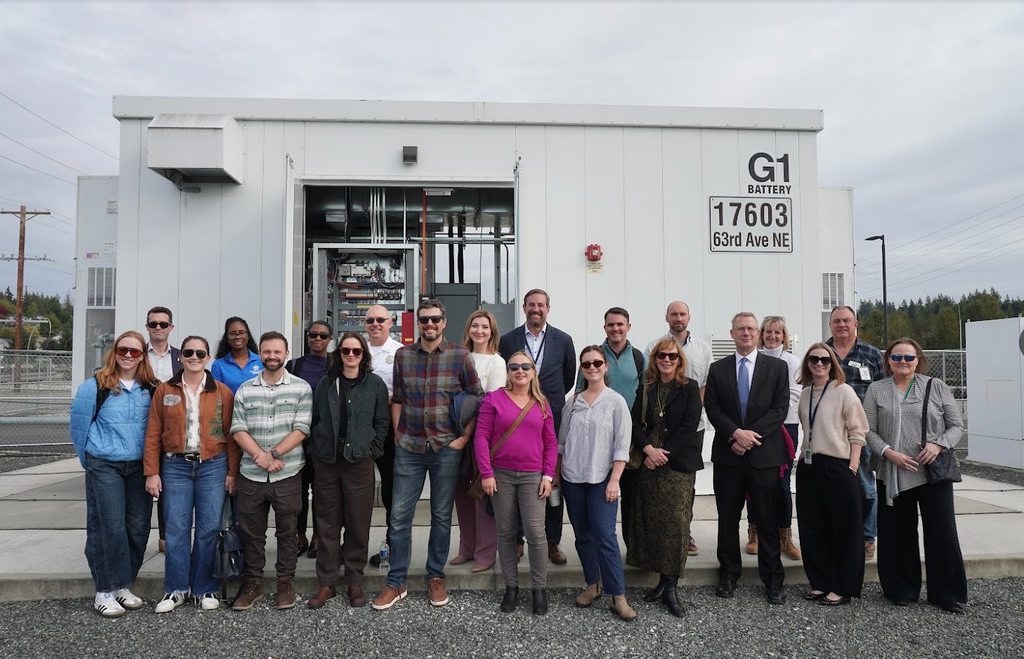
Clean & Prosperous Institute and our incredible delegation of 40 businesses, community leaders, and policymakers are back stateside after our Study Mission 5.0! This year’s Study Mission took us to both Brussels, Belgium – the capital of the European Union – to learn from the longest-running carbon market in the world, and Reykjavik, Iceland to learn about carbon recycling, capture, and sequestration from a country that is run almost entirely on renewable energy (and run entirely by women political leaders). We have so many lessons learned, new ideas, and new partnerships to share in the coming days and weeks.
We want to extend a massive thank you to our sponsors who made this trip possible: The Nature Conservancy, Amazon, bp, CenTrio, Climate Solutions, Washington & Northwest Idaho District Council of Laborers, and Puget Sound Energy, with special thanks to David J. and Linda A. Cornfield.

Over the next several weeks, we’ll be providing deep-dives on topics we learned about on the Study Mission, ranging from subnational and international partnerships, industrial decarbonization, catalyzing biofuels, and carbon capture and sequestration. If you aren’t already, please subscribe to our newsletter and share it with your network.
New Study Underscores Importance of Subnational Leadership on Climate
The central theme of Study Mission 5.0 was the importance of subnational leadership on climate action and the clean energy transition. A new study in Nature titled “State-led climate action can cut emissions at near-federal costs but favors different technologies” further underscores this point.
From the study:
In contrast to the uncertainty of federal support, over two-thirds of the American public now believe the United States should prioritize developing alternative energy sources. The urgency of climate projections, the risk of technological lock-in, and strong citizen support thus turn the current question from when we will decarbonize to how…
Based on the potential for subnational climate leadership, we ask in this research: As compared to federal action, what are the technology and cost implications of state-led decarbonization efforts…
Overall, our findings highlight how state-led and federal decarbonization approaches can yield differing energy portfolios to achieve similar emissions reductions.
A recent article in Grist also highlights the significant steps mayors and governors are taking across the United States to advance climate and clean energy policies. Taken together, it’s clear that meaningful action to reduce emissions and advance renewable energy can (and are) happening regardless of federal rollbacks.
Follow CPI on Social Media
Follow Clean & Prosperous Institute on social media to learn more about our Study Mission 5.0: Brussels and Beyond. You can find us on these channels:
- LinkedIn: @clean-prosperous-institute
- Instagram: @cleanprosperousinstitute
- Bluesky: @cleanandprosperous.bsky.social
Thank You to Our Study Mission Sponsors
We are incredibly grateful to our sponsors who made our Study Mission: Brussels and Beyond possible.