The Science is Clear: EVs Are Good for Our Health
At Clean & Prosperous, we’re committed to helping advance the electric vehicle (EV) transition here in Washington state. Transportation accounts for the state’s largest source of greenhouse gas emissions (GHG) emissions, making increasing EV uptake central to meeting our pollution reduction goals.
Two new reports show that the EV transition isn’t only good for the climate – it is vital for our health.
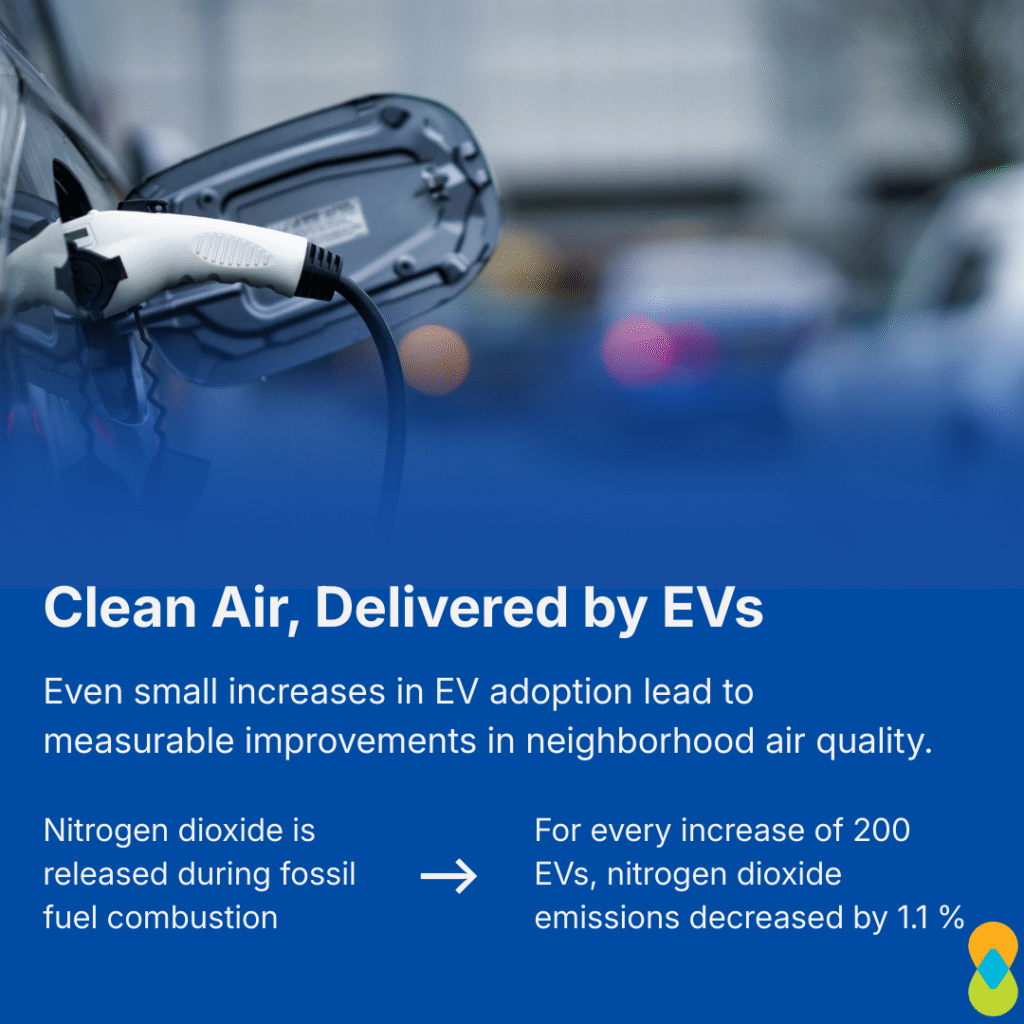
A study published this month in the journal Lancet Planetary Health used satellites to measure nitrogen dioxide – a combustion pollutant linked to asthma and other heart and lung health risks – between 2019-2023 in California. During that period, the study found that for every increase of 200 electric vehicles across nearly 1,700 ZIP codes, nitrogen dioxide emissions decreased by 1.1 percent.
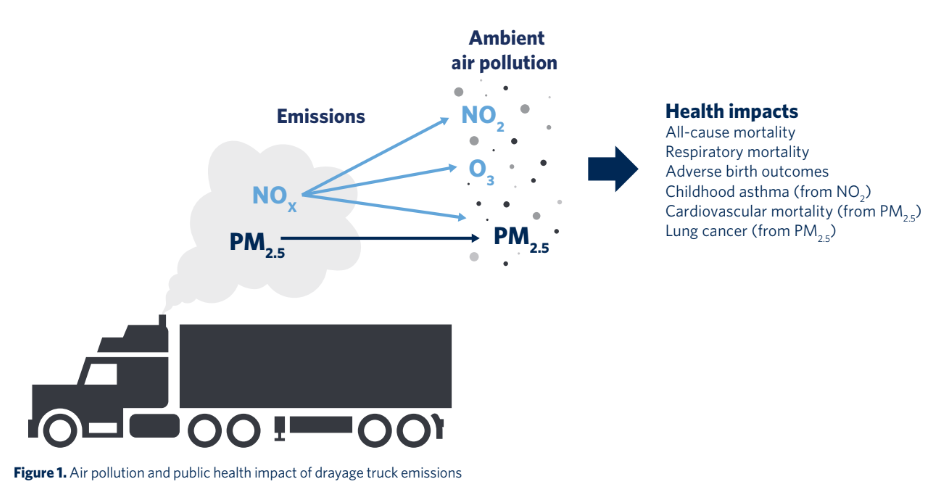
Beyond light-duty EVs, a new report from The Real Urban Emissions Initiative (TRUE) and Duwamish River Community Coalition (DRCC) demonstrates the significant impact drayage truck emissions have on port-adjacent communities, like those in the Duwamish Valley in Seattle.
The study found that:
- Areas of Seattle with elevated drayage truck emissions experience disparate health outcomes. Neighborhoods with the highest idling emissions have overall premature mortality rates over 50 percent higher than areas with no idling emissions.
- There is a racial/ethnic disparity in levels of drayage truck nitrogen oxide emissions. Native American, Latino, and Asian residents are overrepresented in neighborhoods with the highest levels of drayage truck nitrogen oxide emissions.
- Idling emissions are a major source of nitrogen oxide pollution in overburdened neighborhoods. Idling accounts for 45–55 percent of drayage-related NOX emissions in the Duwamish Valley, well above the Seattle average of 32 percent.
In Washington, we’re working to scale the health benefits of transportation decarbonization statewide. EVs make up roughly 20 percent of new passenger vehicle sales, and we’re building the systems to keep that momentum going. The Climate Commitment Act-funded Washington Electric Vehicle Charging Program is helping bring thousands of new EV charging stations to communities across the state, while the Washington Zero-Emission Incentive Program (WAZIP) will help fleets transition to cleaner vehicles faster. Together, these investments aim to cut emissions, improve air quality, and deliver healthier air in communities across the state.
Learn more about our work on transportation electrification here.
Get Notified About Study Mission 6.0: Building Bigger & Faster in Texas
In case you missed it: At our Future of Carbon Policy Forum we announced our Study Mission 6.0: Building Bigger & Faster in Texas! We’ll be heading down south May 11-15, 2026 to engage directly with clean energy advocates, regulators, project developers, and policymakers to learn how Texas is building clean energy faster and at scale – and what Washington can apply at home.
Why Texas? Because it’s time for Washington state to transition from ambitious policy to effective and efficient implementation. That is what we can learn in Texas! They are the clean energy growth leader in the United States.
- In 2024, Texas surpassed California as the state with the most utility-scale solar capacity.
- Halfway through 2025, Texas accounted for nearly one-third of all solar capacity added in the United States.
- Since 2021, battery storage on the Texas grid has nearly doubled every year.
- They have the fastest new energy project to grid connection rate in the country, at roughly 20 months.
Want to get notified when early bird registration opens for Study Mission 6.0? Sign up at the button below.
Follow Clean & Prosperous
Follow Clean & Prosperous on social media to learn about our work to accelerate clean energy and power prosperity for communities across Washington. You can find us on these channels:
- LinkedIn: @clean-and-prosperous
- Instagram: @cleanandprosperous
- Bluesky: @cleanandprosperous.bsky.social