What We’re Reading on Clean Energy
This week, we’re sending you a breakdown of what’s been crossing our desk at Clean & Prosperous as it relates to Washington – and the country’s – much-needed clean energy buildout.
The Seattle Times on WA’s Need for Utility-Scale BESS
Earlier this week, The Seattle Times columnist Josh Farley published “WA’s clean energy transition will fail without giant batteries.” The article makes a point Clean & Prosperous has long emphasized: Washington’s clean energy future depends on building the infrastructure to support it.
From the column: “More electric vehicles or heat pumps? The grid must produce the electrons to cover them. Take away a dam, or close a coal power plant? Something else must rise in its place to meet the load, or damaging blackouts could result. Batteries are a key ingredient in helping preserve this grid stability.”
Utility-scale batteries can supercharge our clean energy transition. They build resiliency, make clean power like solar and wind more viable, and reduce stress on our grid.
Projects like the Cascadia Ridge BESS facility – mentioned in The Seattle Times column – are essential to strengthening grid reliability and supporting Washington’s clean energy future.
Clean Energy Generation Set Records in Spring
Canary Media recently offered a glimpse of where the energy system is headed.
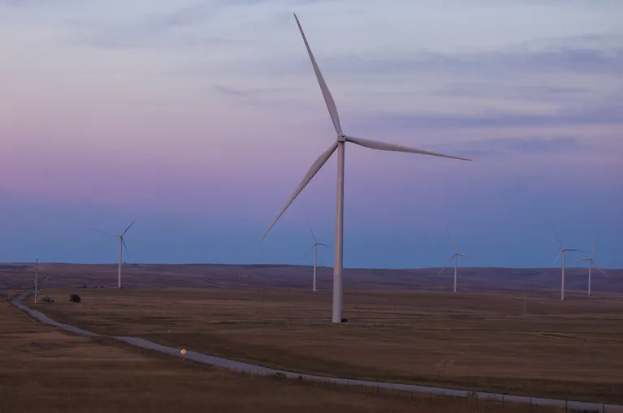
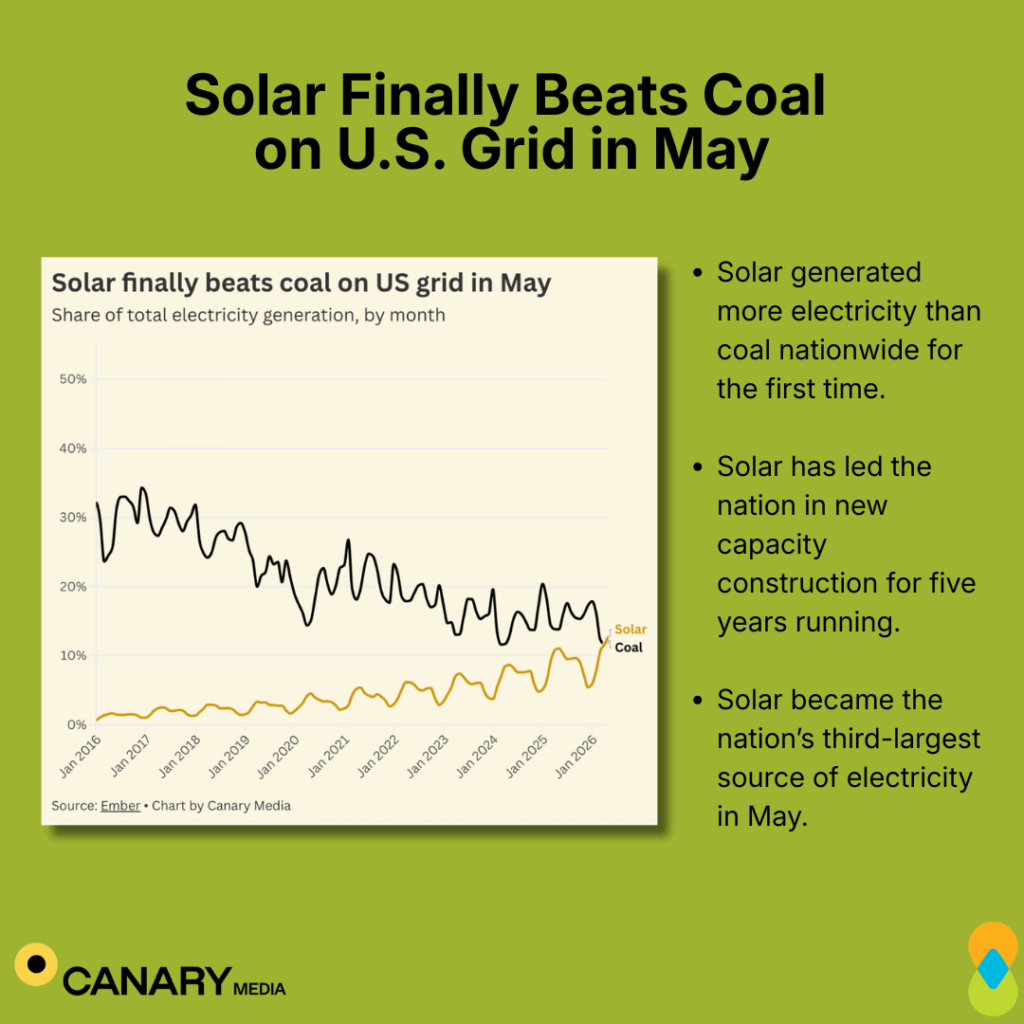
Across the country, clean energy set record after record. Solar generated more electricity than coal nationwide for the first time, while California’s batteries and Texas’ wind and solar fleet reached new highs. These milestones push the boundaries of what’s possible and show what happens when we invest in a diverse portfolio of clean energy resources!
No single source of clean energy can run the whole grid on its own, but none has to. Solar, wind, and battery storage (and emerging technologies like fusion and next-gen geothermal) each play a different role, creating a more reliable, resilient, and affordable electricity system that can meet growing demand.
But Clean Energy Cuts Are Killing Good Jobs
Despite continued progress in clean energy deployment, the federal government’s efforts to kneecap low- and zero-carbon businesses are having an impact, most notably on good jobs.
A recent analysis from E2 found “216 large-scale clean energy and clean vehicle manufacturing and electricity generation projects that have been canceled, closed, or downsized since January 2025.”
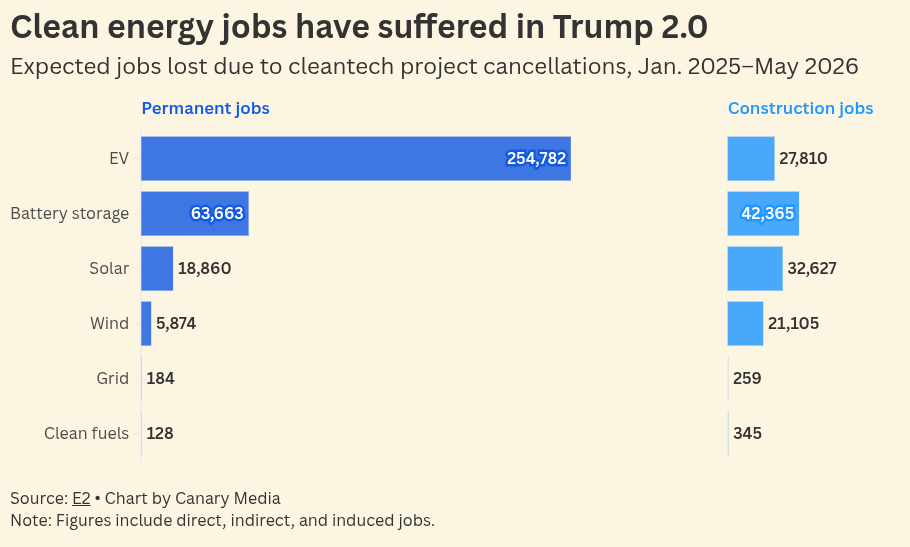
Those lost projects “will cost the U.S. economy nearly 470,000 jobs and hundreds of billions of dollars in foregone wages, tax revenues, private investment, and economic growth.” Nearly 50,000 of those would have been permanent roles at the facilities themselves, and the rest would be construction jobs as well as jobs in related, complementary industries.
Our Build Sustainable High Impact Infrastructure Together (Build SHIIT) report found that 580,000 jobs are trapped in Washington’s clean energy pipeline. Every time we say ‘no’ to a clean energy project, we are also saying ‘no’ to good-paying jobs that boost our economy and support communities.
Energy Costs Are Rising, but Renewables Remain the Cheapest
This one is for our fellow wonks! Heatmap recently dove into investment bank Lazard’s annual Levelized Cost of Energy (LCOE) report. LCOE “measures the dollars per megawatt-hour a power plant needs to earn in revenue to break even over the course of its lifetime in present-value terms.” Put simply, it evaluates the long-term cost of energy generation (with some limitations noted in the article).
Lazard’s analysis found that LCOE across all sources of energy is rising, but renewables continue to be the cheapest. The LCOE of renewables, like utility-scale solar, “has fallen from $359 per megawatt-hour (MWh) in 2009 to $69 in 2026.” That’s a remarkable decrease, although higher than its LCOE of 2025, which was $58 per MWh.
As a point of comparison, the report describes natural gas prices as “spiral[ing] upward,” with “a combined cycle natural gas plant rose from $78 per megawatt-hour to $90 in the past year.” Lazard ascribes this rise to “huge and growing customer demand.”
Read the full breakdown of Lazard’s LCOE analysis here.
Follow Clean & Prosperous
Follow Clean & Prosperous on social media to learn about our work to accelerate clean energy and power prosperity for communities across Washington. You can find us on these channels:
- LinkedIn: @clean-and-prosperous
- Instagram: @cleanandprosperous
- Bluesky: @cleanandprosperous.bsky.social