A Key to Saving Washington’s Grid is in Your Driveway
There has been much discussion lately about Washington’s projected power gap, from the heavily publicized E3 analysis that finds a nine gigawatt (GW) resource adequacy gap by 2030, to a Net-Zero Northwest analysis that predicts Washington’s electricity demand to grow by 77 percent by 2045 due to increased load. A recent report in The Seattle Times also detailed some Washington utilities’ efforts to build out new natural gas peaker plans in response to our projected energy needs.
We’ve elaborated at length about the need for Washington to build much more clean energy, much faster. Doing this will require a cultural and political reset for our state – we’ll need to embrace development as core to our climate mission – alongside legislative changes that put firm timelines on the permitting process, reduce bureaucracy, and limit appeals.
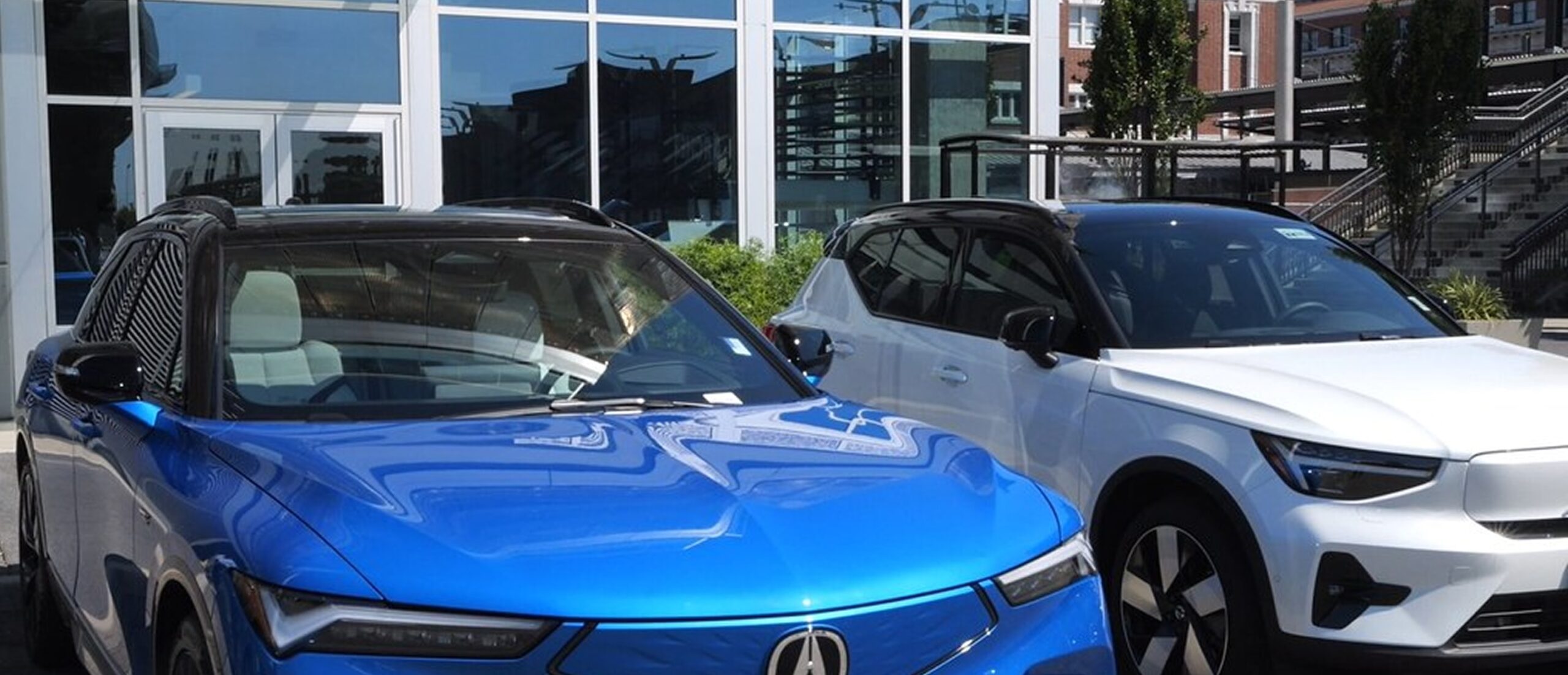
But building more utility-scale infrastructure isn’t the only solution to addressing our clean energy needs. One key to saving our power grid sits in 294,193 Washingtonians’ driveways: Electric vehicles.
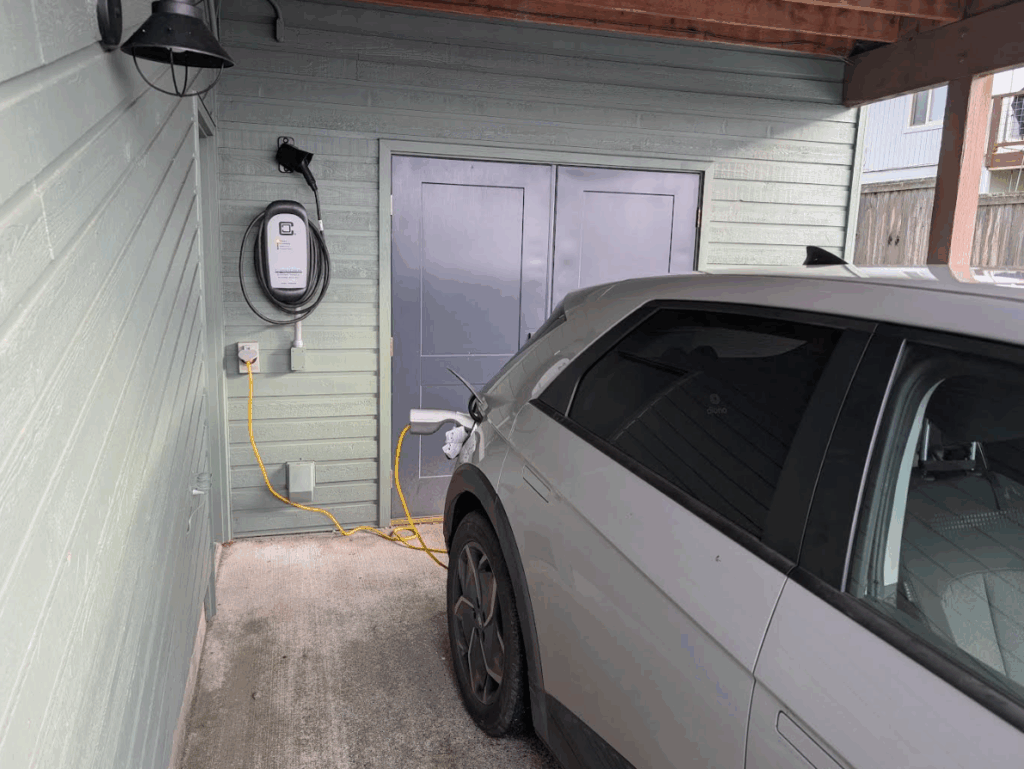
Here’s a great datapoint from the Energy Capital Podcast: “About 6 million electric vehicles are on American roads, and roughly 1 million of them can already export power back to the grid. A typical one sits parked about 95 percent of the day, plugged in for 12 to 14 hours while needing 2 to 3 hours of charge.”
How can we deploy this existing capacity? By creating a Virtual Power Plant (VPP) through Vehicle to Grid (V2G) programs, implemented by Washington utilities. That means we export unused energy from an EV battery back to the power grid. V2G is particularly impactful when paired with managed charging by the driver, which essentially means charging your vehicle at times of low demand (overnight), so that its excess power can be redeployed as part of a VPP during times of high demand (late afternoon/early evening, or extreme heat or cold snaps).
Skeptical of the material impact this could have? From the Energy Capital Podcast again: “About 1 million [EVs in America today] already have that bidirectional power capability…that’s 10 GW of power, which is the equivalent of 10 nuclear power plants…we’ve actually got all of that energy potential just kind of sitting idle in American driveways and on American roads today that we could be tapping into.”
Following that same basic math, Washington state may have nearly 483 megawatts (MW) of clean energy capacity sitting in our driveways right now. Not a silver bullet, by unquestionably an extremely useful addition to our grid, all without needing to build new infrastructure.
This capacity is set to grow significantly in the coming months and years. Cox Automotive estimates that 300,000 EVs will come to market as used vehicles in America this year. Next year, that will double to 600,000, and reach 700,000 in 2028. We’ll feel the effects locally as leased vehicles accessed through the Washington EV Instant Rebate Program return to the market as more affordable used options.
It’s clear that plugging into our existing energy capacity through V2G would have a meaningful impact on grid resilience and stability. But it could have significant benefits for ratepayers, as well. In New York, Con Edison customers get cash back from the utility for every kilowatt hour they charge their vehicle off-peak, with customers reporting earning over $1,000 per year. In Massachusetts, ratepayers can opt into a system that allows their utility to access the capacity of their EV battery during peak demand events, and the ratepayers are compensated for their contributions to the grid.
Locally, Puget Sound Energy is developing what they call a “V2X” program, which would tap into EV batteries to boost resilience for homes, buildings, and the grid. The utility is exploring potential direct compensation for participating ratepayers, and you can sign up to stay informed here. Clean & Prosperous would love to see this option come online for customers, and to see other utilities plan for and deploy a similar strategy.
As we get our SHIIT together to meet our utility-scale demand needs, Washington should also tap into the capacity sitting right in our driveways to supplement large-scale buildout, support EV adoption, and provide returns to participating ratepayers.
Read more:
- How our Research Director powered his family’s home with their EV
- Energy Capital Podcast: Ten gigawatts are parked in American driveways
- Grist: The Secret to a Better Grid? Electric Vehicles
- Heatmap: Exclusive: How California Could Unlock Its Distributed Energy Potential
Considering Zero-Emission Commercial Vehicles? Start Here.
Transitioning to zero-emission commercial vehicles and equipment raises important questions about vehicle selection, charging, costs, and implementation. WAZIP can help.
That’s exactly why the Washington Zero-Emission Incentive Program (WAZIP) Ride & Drive was created—to connect businesses with the vehicles, experts, and resources they need to make the transition with confidence.
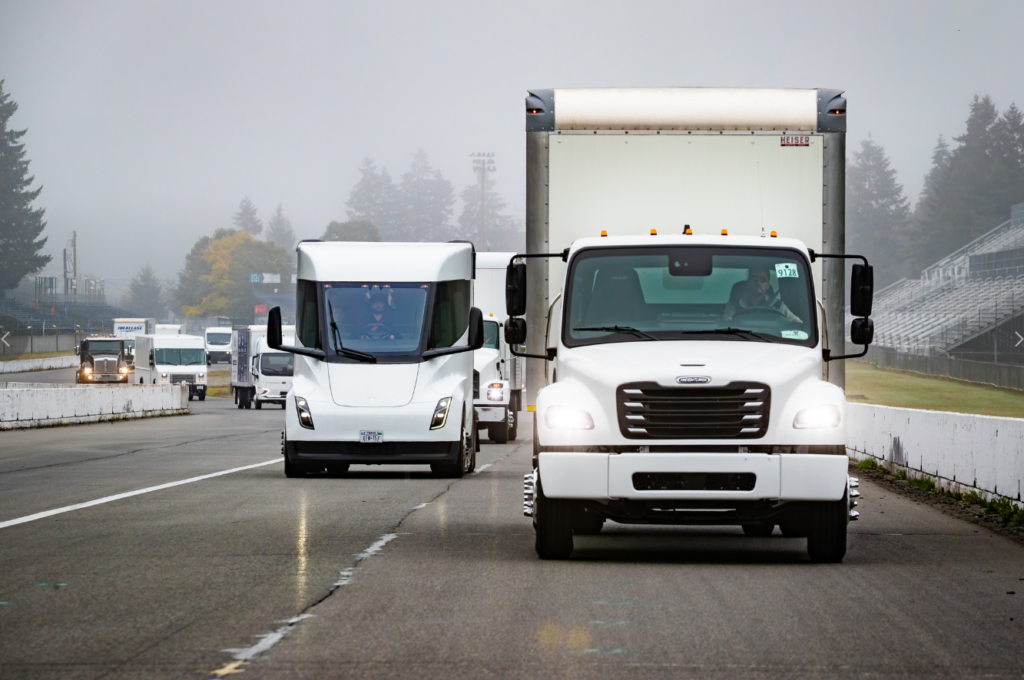
Join us on September 21 at Pacific Raceways in Kent to connect with the people and resources that can help you make an informed decision.
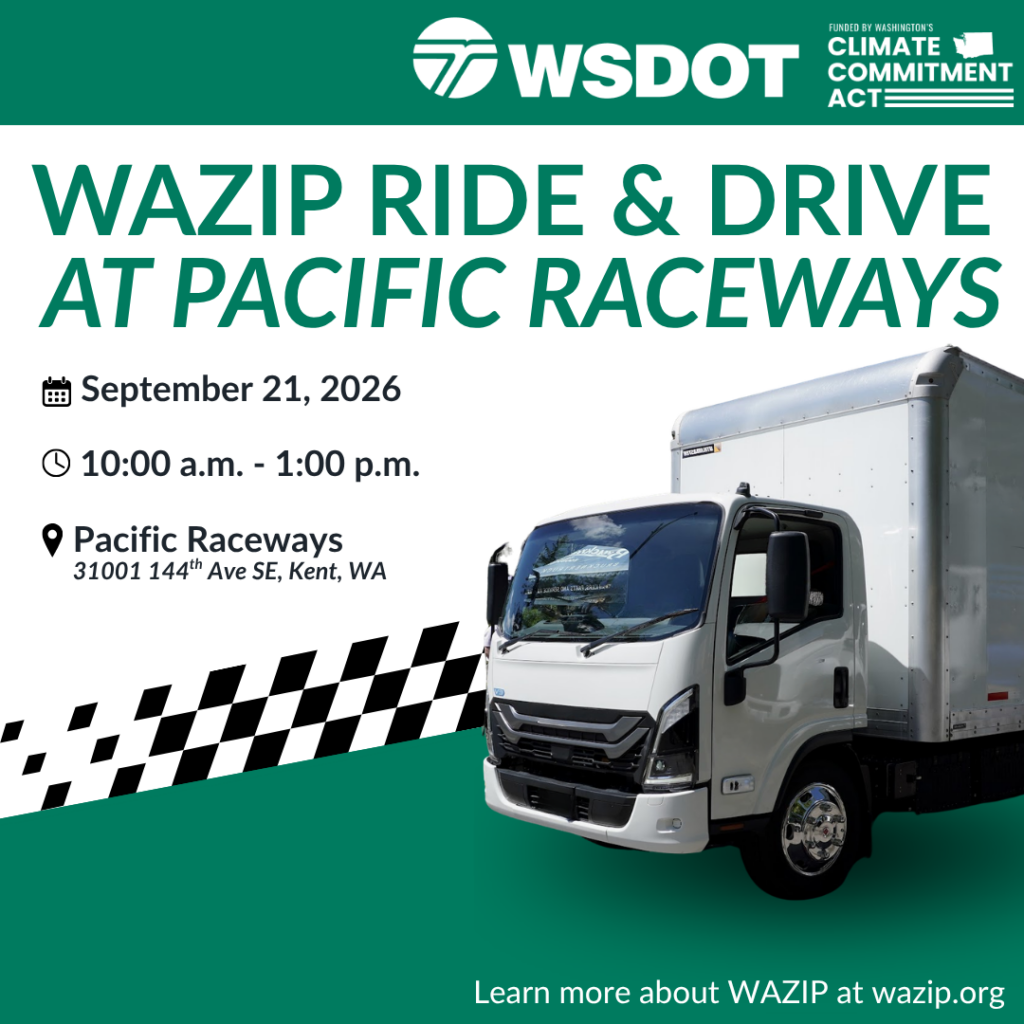
At the event, you’ll be able to:
- Test drive eligible zero-emission commercial vehicles
- Explore equipment from multiple manufacturers
- Learn how WAZIP vouchers can reduce upfront costs
- Meet with dealers, utilities, technical advisors, and WAZIP staff
- Get practical guidance tailored to your business
Some of the vehicles that will be available to view and/or test:
- Medium-duty box truck
- Medium-duty step van
- Class 8 semi truck
- Electric backhoe
- Electric mini wheel loader
- Electric excavator
- Electric harbor craft
When you’re exploring your zero-emission options, WAZIP is here to help you navigate the process with confidence.
Follow Clean & Prosperous
Follow Clean & Prosperous on social media to learn about our work to accelerate clean energy and power prosperity for communities across Washington. You can find us on these channels:
- LinkedIn: @clean-and-prosperous
- Instagram: @cleanandprosperous
- Bluesky: @cleanandprosperous.bsky.social