
Building Towards a Clean & Prosperous Future
Our Executive Director Michael Mann was honored to deliver remarks at the 2027 Public Power Forum, hosted by Energy Northwest.
Michael took the stage before Derek Thompson, the award-winning co-author of Abundance. Unsurprisingly, we’re big fans at Clean & Prosperous, and couldn’t agree more with the mantra he displayed on the stage behind him during his talk: “Growth is good. Change is hard. Both are true. And stasis sucks.”
At the Forum, we shared more about Washington’s unmatched clean energy development delay, including how it plays out in practice and what we can do about it.
First, the context: Our Build Sustainable High Impact Infrastructure Together (Build SHIIT) analysis found over 250 credibly-proposed clean energy and industrial modernization projects trapped in Washington’s pipeline. Over the next 10 years, those could amount to $150 billion in economic activity, 580,000 jobs and 23 gigawatts of clean generating capacity. Yet Washington state is dead last in the country when it comes to renewable growth over the last 20 years.
The reality is Washington’s glacial pace of development puts our emissions reduction goals at significant risk of failure, and keeps massive economic and employment opportunities on the sidelines.
Many of the clean generation projects in our Build SHIIT database are in Central and Eastern Washington and rely on transmission infrastructure to bring those electrons over to our load center, which is generally the Puget Sound region. However, Washington is essentially out of room on our transmission lines.
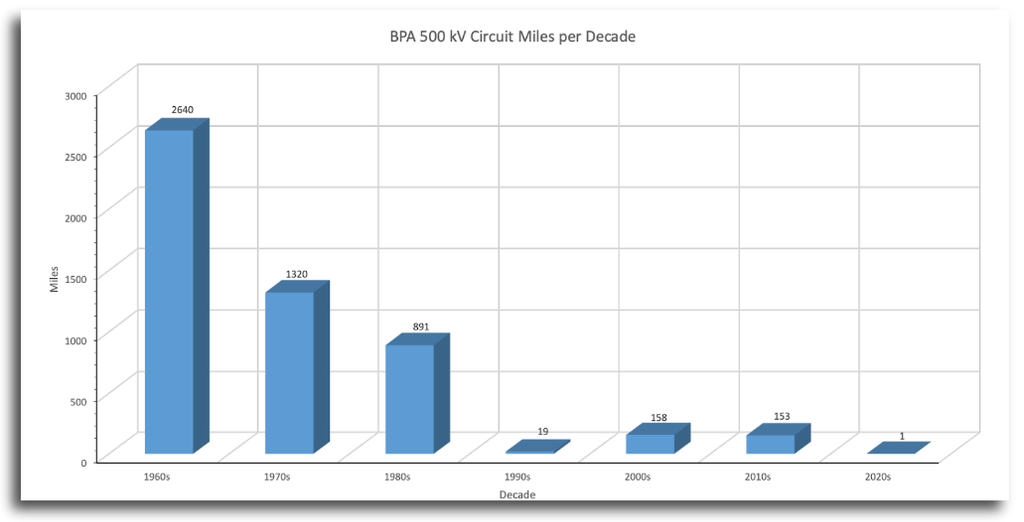
Washington needs to keep our ambition high to build more transmission, but in the meantime we need other distributed solutions that keep our electrons near our load center. But Washington lacks significant clean generation resources in proximity to our load center. So what do we do then?
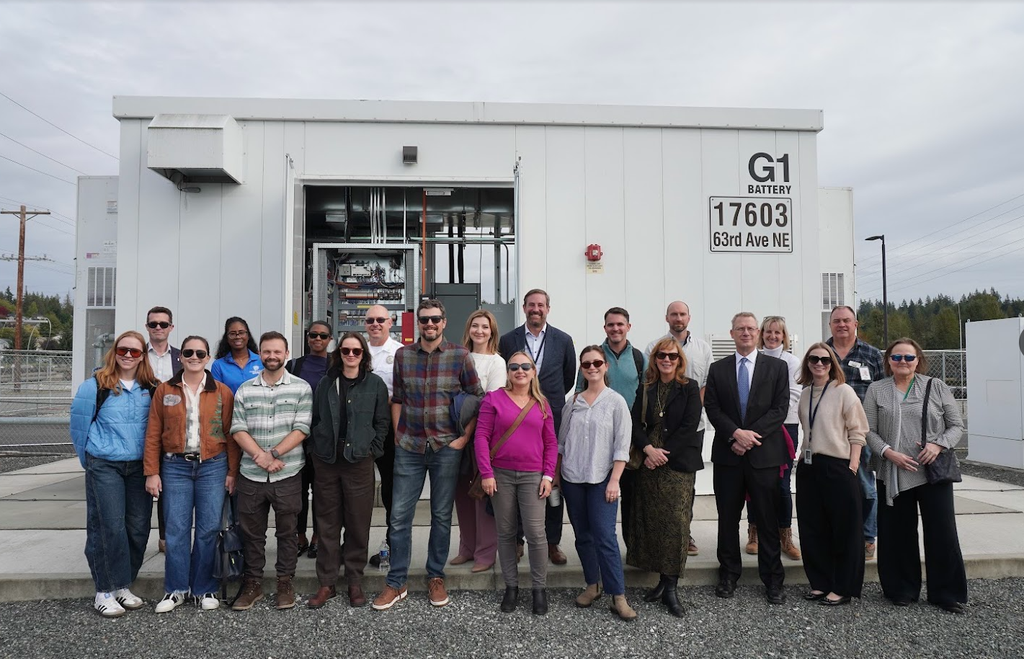
Battery storage offers one meaningful opportunity. These systems store power during times of low demand and high generation – like when the wind is blowing in the middle of the night – and deploy it later during times of high demand and low generation. This makes Battery Energy Storage Systems (BESS) particularly valuable in a state with siloed generation and load, and stretched transmission capacity.
In our Build SHIIT analysis, we found 54 standalone BESS projects in Washington’s pipeline. Sixty-one percent of these projects are west of the Cascades. Unfortunately, 21 cities or counties have either passed an ordinance that restricts BESS development or have an out-and-out moratorium. You can see those reflected on the map below.
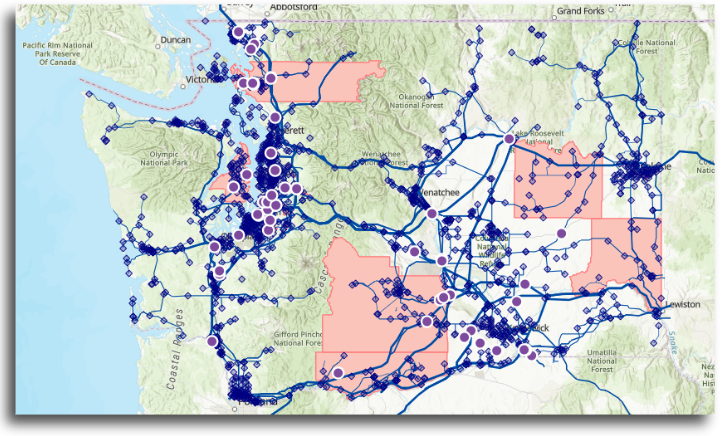
Across the state, more than one in four BESS projects in the pipeline sit in one of these restrictive jurisdictions. As a point of comparison, only six jurisdictions have BESS enabling ordinances.
Clean & Prosperous believes that batteries can supercharge our clean energy transition. But right now, projects are facing significant barriers. Take the following examples from Skagit County and the City of Sumner.
Skagit County is home to two of Washington’s four largest refineries, responsible for 3.5 percent of our state’s greenhouse gas emissions. One of those refineries experienced a catastrophic explosion that killed seven workers in 2010. In 2023, a BNSF train went off the rails and spilled 3,100 gallons of diesel along Padilla Bay. Just months after the BNSF incident, the Olympic Pipeline had a failure that resulted in 21,000 gallons of gasoline spilling into Skagit farmlands.
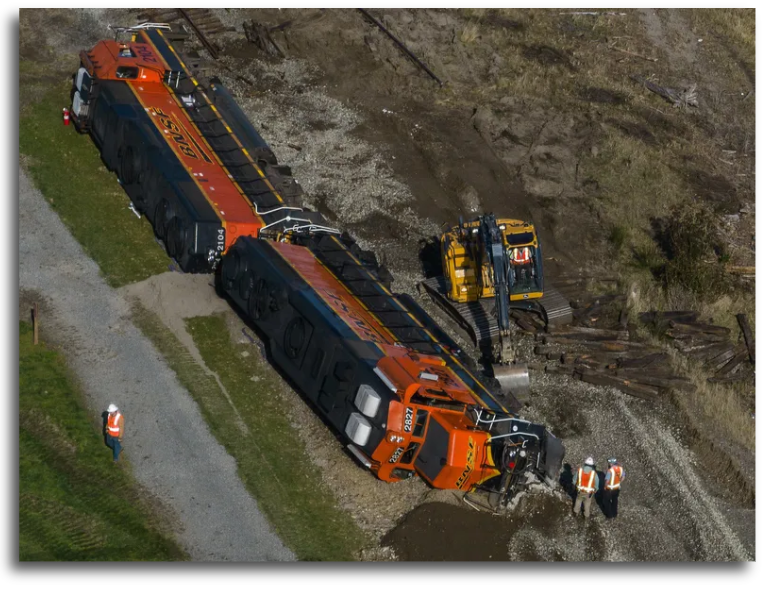
But what energy facility is drawing the ire of neighbors in Skagit County? A 20 acre BESS facility, almost adjacent to an existing substation that is capable of powering over 200,000 homes for four hours. This project is now opposed by local governments, elected officials, tribes, and a host of community groups.
The City of Sumner offers another example of how a scarcity approach to utility-scale BESS development is playing out in Washington. The City is currently updating its existing BESS ordinance and making it much more restrictive to development.
Battery storage needs to be sited in proximity to a substation and transmission infrastructure, much like the Greenwater BESS project, currently under construction in Sumner. There is only one substation connected to high-voltage transmission lines within city limits.
The City, in its draft ordinance, is contemplating a 1,000 foot buffer between utility-scale BESS and residential areas. That buffer area includes all substations within city limits, and the Greenwater facility under construction. This makes the buffer a de facto ban on any new utility-scale energy storage projects.
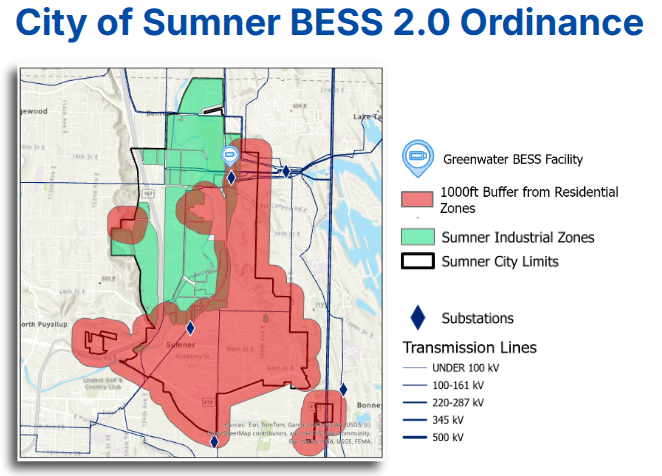
Over the last 50 years, Washington has become really good at saying “no” to things. And this kind of 1,000 foot setback is a great example of how that plays out in practice. Clean & Prosperous would like us to start saying “yes” to projects and planning from the perspective of: how can we enable, rather than restrict, this critical infrastructure?
Reform is needed at every level.
At the federal level, we are encouraged by some of the provisions of the recently proposed Bipartisan American Affordability and Jobs Act (BAAJA), particularly those that support transmission buildout.
At the state level: Washington already has a playbook for how to address a supply crisis. We crafted it for housing. There are so many housing reforms we can recontextualize for clean energy, ranging from by-right siting near transmission, to a duty to plan, to limiting opportunities for appeal and expediting permit reviews.
Locally, those of us who care about climate change are ceding massive territory by not getting in the game at the city and county level. The greater environmental movement learned over decades how to stop destructive projects. Our challenge now is to learn how to get the good ones built.
It doesn’t take skill sets that we don’t have. It simply takes focus and energy. Delay is not free: the longer a project waits the more cost is ultimately passed to ratepayers. Washington must build more clean energy, faster, or pay more for less of it.
Learn more about our work to help Washington build much more clean energy, much faster: https://cleanandprosperous.org/build-shiit-now/.
The Future of Fusion With Helion
Last week we visited Helion to get a closer look at how they’re working to turn fusion into a practical source of electricity for the grid.
We learned about Orion, Helion’s first commercial fusion power plant under construction in Malaga, Washington. Designed to deliver an initial 50 megawatts of electricity to the grid, Orion is part of Helion’s goal of making fusion energy reliable, affordable, carbon-free power.
We also heard more about Polaris, Helion’s seventh-generation fusion prototype in Everett, and how testing has helped advance the technology needed for commercial fusion. In February 2026, Polaris reached plasma temperatures of 150 million degrees Celsius, an important milestone in testing the extreme conditions needed for fusion.
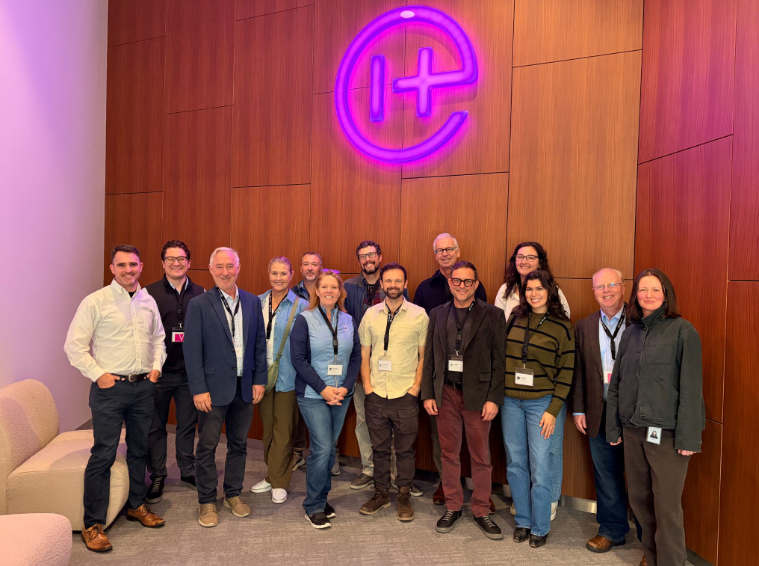
Fusion holds exciting potential as a future source of carbon-free electricity, and it was a great opportunity to take a deeper look into the hard work involved in generating power through fusion. Companies like Helion are exactly the kind of businesses we want to see investing and creating jobs in Washington state.
That’s why we were thrilled to see Helion receive $175 million from the U.S. Department of Commerce, alongside $50 million in additional private investment. This is an exciting step forward for fusion energy and semiconductor manufacturing in Washington state, and globally! Learn more here.
Follow Clean & Prosperous
Follow Clean & Prosperous on social media to learn about our work to accelerate clean energy and power prosperity for communities across Washington. You can find us on these channels:
- LinkedIn: @clean-and-prosperous
- Instagram: @cleanandprosperous
- Bluesky: @cleanandprosperous.bsky.social